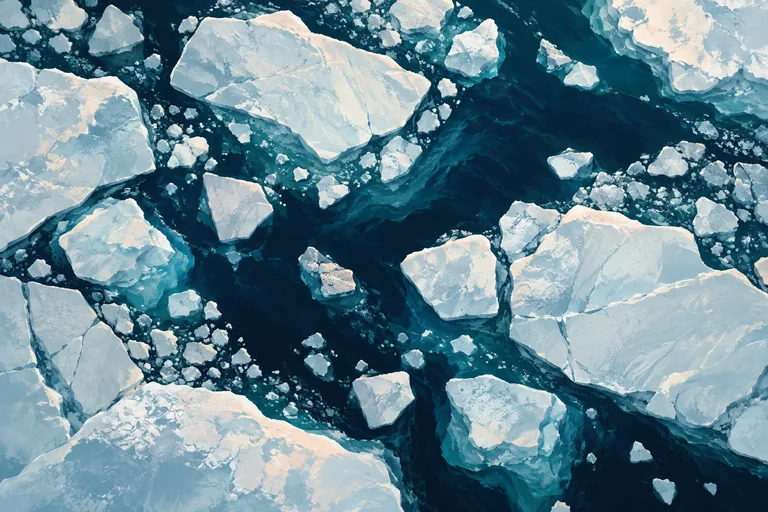
Colliding ice floes help explain Arctic drift
A UC Riverside-led study finds that collisions between sea-ice pieces can explain movement that wind-only models miss.
UC Riverside ·
THE GLOBAL BRIEFING
A clearer view in a few minutes. Read the brief. Explore the source.
The next briefing has not been published yet. You can still read the previous selection below.
Stories move here after 24 hours, or when replaced in the selection. Grouped by the date they left the briefing (UK time). Original source dates stay visible.
A UC Riverside-led study finds that collisions between sea-ice pieces can explain movement that wind-only models miss.

Oxford scientists have followed an engineered virus-like particle assembling from its protein components, molecule by molecule.

A Yale-led study suggests the solar system began preferentially collecting heat-formed grains within its first million years.

NASA’s latest Earth Observatory report describes unusually high temperatures across parts of the United States on 15 September.
A new field report describes a Canadian-led expedition measuring waters along Greenland’s coast to help validate NASA’s PACE observations.
Cornell researchers have identified a protein involved in how a yeast responds to sugars, offering a possible route to future biotechnology work.

Cornell researchers report that imperfections in an iron-based material can be central to how its superconductivity changes.
Weill Cornell Medicine has received a five-year, US$17.4 million research grant to investigate ways of shortening tuberculosis treatment.

A US$3.5 million grant will support UC Riverside work on detecting shortness of breath, including in people who cannot easily describe it.

A Yale and Edelman Trust Institute report explores how people weigh medical expertise, personal experience and AI when making health decisions.
NASA’s 18 September station update reports the final run of an experiment testing how electronic components can be soldered in microgravity.

NASA has published a Landsat view of ash and volcanic gases rising from Anak Krakatau, between Java and Sumatra.

UC Riverside researchers report that fire exposure and the environmental recovery that follows are unevenly distributed across urban neighbourhoods.

A World Weather Attribution assessment investigates how a rock collapse developed into an avalanche, debris flood and flash flood in Nepal’s Rasuwa district.
A new analysis identifies a large area of the central northern Amazon where dry-season temperature extremes have intensified especially quickly.
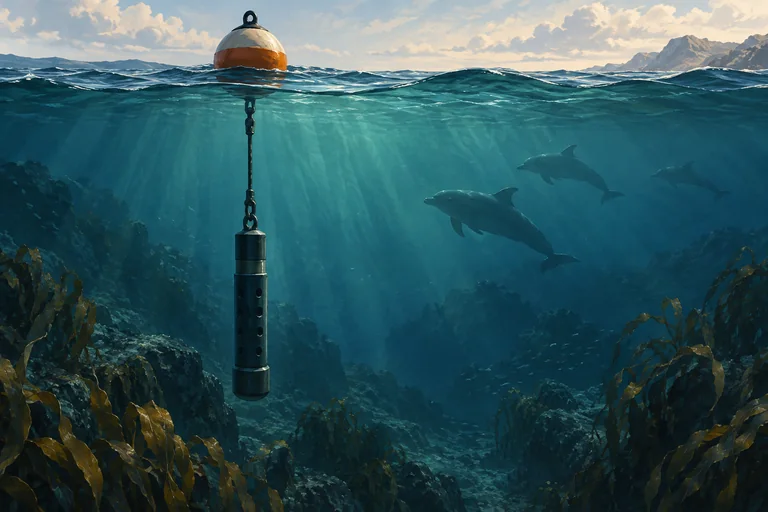
A £2.7 million research project is bringing together acoustic records to study marine-mammal movements and underwater noise across the Celtic Sea.

Queensland researchers argue that crop varieties should be assessed for their effects on the crop that follows them, as well as their own yield.
University of Queensland researchers are developing lead-free photovoltaic materials that could harvest indoor light to power wearable devices.
Researchers met at the UK’s Animal and Plant Health Agency to review 100 years of work on Newcastle disease.
Researchers have identified an enzyme involved in a chemical modification of bacterial transfer RNA.

An X-ray observatory has tracked gas falling towards a pulsar, giving astronomers a closer look at how these tiny, dense stars fuel their flares.
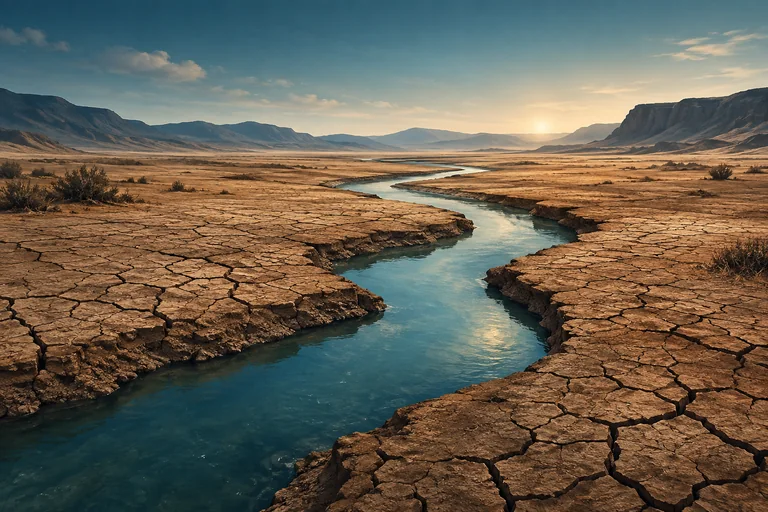
The World Meteorological Organization says 2025 was among the driest years for river flows in more than three decades.

The WMO’s new bulletin says the Antarctic ozone hole in 2025 was among the smallest recorded in recent decades.
MIT has outlined work on tools intended to help communities and infrastructure planners assess exposure to extreme weather.